ARTICLE
Safety for Warehouse Workers: The Overlooked Role of Pallet Design
ARTICLE
Safety for Warehouse Workers: The Overlooked Role of Pallet Design
Table of Contents
“More than 30,000 people visited emergency rooms between 2014 and 2018 due to pallet-related injuries.“
Read a Case Study
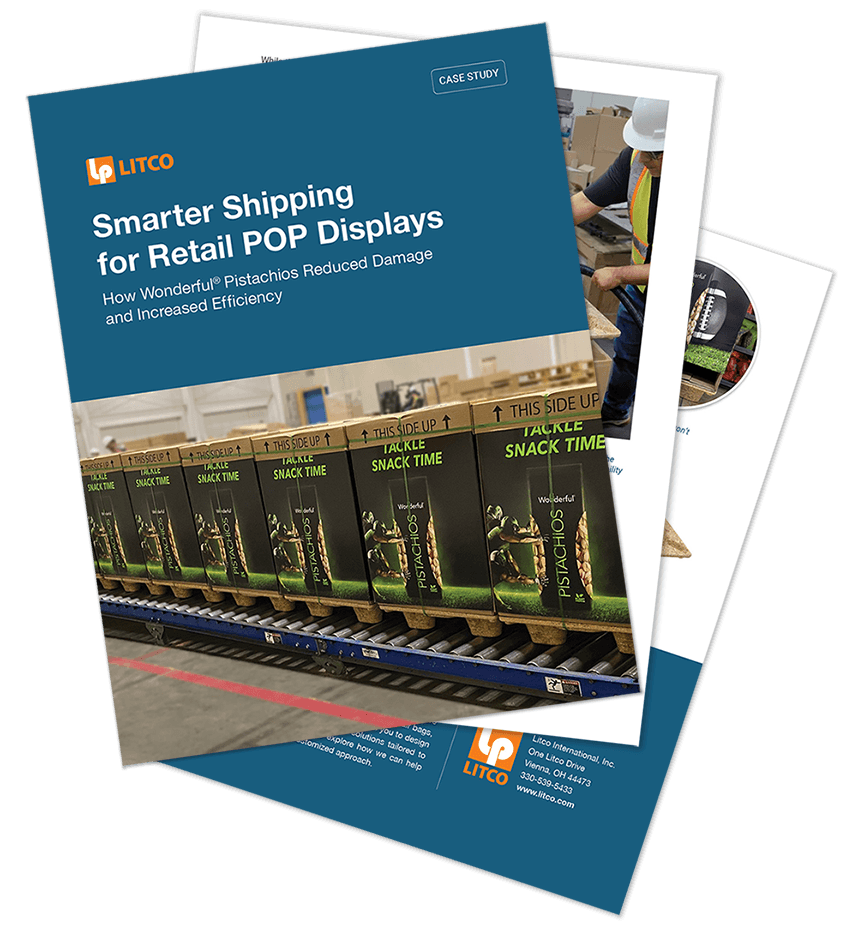
Wonderful® Pistachios, America’s top-selling snack nut, was experiencing shipping damage to its seasonal point-of-purchase (POP) displays. The primary cause: unreliable recycled wooden stringer pallets.
“Safety for warehouse workers is closely connected to pallet design. Damaged or poorly designed pallets can contribute to injuries, operational delays, and product loss. Safer pallets, by contrast, support more efficient handling, fewer disruptions, and long-term cost savings.”
August 20th, 2026
12 Minute Read
When it comes to managing warehouses, distribution centers, and field operations, safety for warehouse workers is always top of mind. Every day, employees handle thousands of pounds of freight. They rely on pallets as the foundation for safe and efficient operations. But what if the very pallets they use are creating unnecessary risks?
Traditional wood pallets – especially recycled or repaired GMA-style pallets – can introduce hidden dangers into the workplace. Protruding nails puncture gloves and hands. Splintered boards cause painful cuts and abrasions. Weak or damaged edges can break under pressure, leading to product spills, trip hazards, and injury claims. Over time, these risks slow down loading crews, increase workers’ compensation costs, and reduce overall productivity.
There is a better way. Litco’s Inca Engineered Molded Wood® pallets are designed to reduce these hazards. These pressed wood pallets are molded from recycled wood fiber under heat and pressure into a single, one-piece unit, giving them a smooth, uniform surface with no nails or loose splinters. This supports safer, more efficient pallet handling for your team and a safer operation throughout the supply chain.
The pallet you choose directly affects worker health and productivity. Here’s why:
- Hidden hazards of nailed wood pallets: Protruding nails and loose deck boards can cause hand injuries, snag clothing, or puncture product packaging.
- Splinters and rough surfaces: Standard lumber can easily splinter, creating frequent risks of cuts and abrasions.
- Structural weakness: Over time, repaired or used pallets often lose integrity, making them prone to collapse.
- Load instability: A pallet that flexes or deforms under weight can shift loads during transit, endangering both workers and drivers.
By contrast, a pressed wood pallet engineered for stiffness, strength, and safety minimizes these risks while providing reliable, repeatable performance across the distribution chain.
Litco’s Inca-brand Engineered Molded Wood® pallet is not just another pallet. It is a solution designed around three critical factors: safety, strength, and stability.
- Single-piece design: Unlike nailed pallets, there are no fasteners or joints that loosen over time.
- Smooth surface: No exposed nails, nail pops, or splinters that can injure workers or damage products.
- Tested strength: Proven in field conditions and tested at the Center for Packaging and Unit Load Design at Virginia Tech to outperform 48″ x 40″ GMA-style new and repaired pallets.
- Safe load ratings: Built to ASTM Standard D1185, supporting up to 2,500 lbs dynamic and 7,500 lbs static loads.
- Greater forklift resistance: Offers 52% greater resistance to fork-related edge damage compared to traditional nailed pallet boards.
The result is a pallet that protects workers, products, and supply chains.
The Importance of Lighter Pallets in Worker Safety
One of the most overlooked safety advantages of Litco’s pressed wood pallets is their lighter weight. At 10–33% lighter than traditional GMA-style wood pallets, they reduce the strain of manual handling.
A standard 48 × 40-inch GMA-style wood pallet generally weighs 30–50 pounds, depending on the wood species, moisture content, construction, and condition. Heavier, higher-density pallets may weigh 40–60 pounds. The NIOSH Revised Lifting Equation, a guideline referenced by OSHA, uses 51 pounds as the baseline for an ideal lift but recommends lower weights when lifting conditions are less favorable. By comparison, Litco’s pressed wood pallets typically weigh 27–35 pounds, helping reduce the risk of back and shoulder injury among warehouse staff.
This difference isn’t just about comfort – it’s about real-world safety and efficiency. Research from Penn State University, using U.S. Consumer Product Safety Commission data, found that more than 30,000 people visited emergency rooms between 2014 and 2018 due to pallet-related injuries.
Lighter, one-piece pallets not only reduce the physical burden of lifting and moving heavy loads but can help prevent these types of workplace accidents altogether. In high-volume operations, that translates to hundreds of pounds less lifted per worker each shift – an enormous impact on long-term employee health and retention.
Built-In Safety: Rounded Corners and Nail-Free Design
Beyond weight, Litco’s pressed wood pallets are engineered for handling safety from the ground up. Their rounded corners and smooth, nail-free surfaces eliminate the sharp edges, splinters, and protruding fasteners commonly found in traditional pallets.
This design helps prevent cuts, glove punctures, and snags that can slow down operations or cause injury. Combined with their nestable, one-piece structure, these features make Litco pallets exceptionally easy to maneuver – whether by hand, pallet jack, or forklift – further enhancing workplace safety.
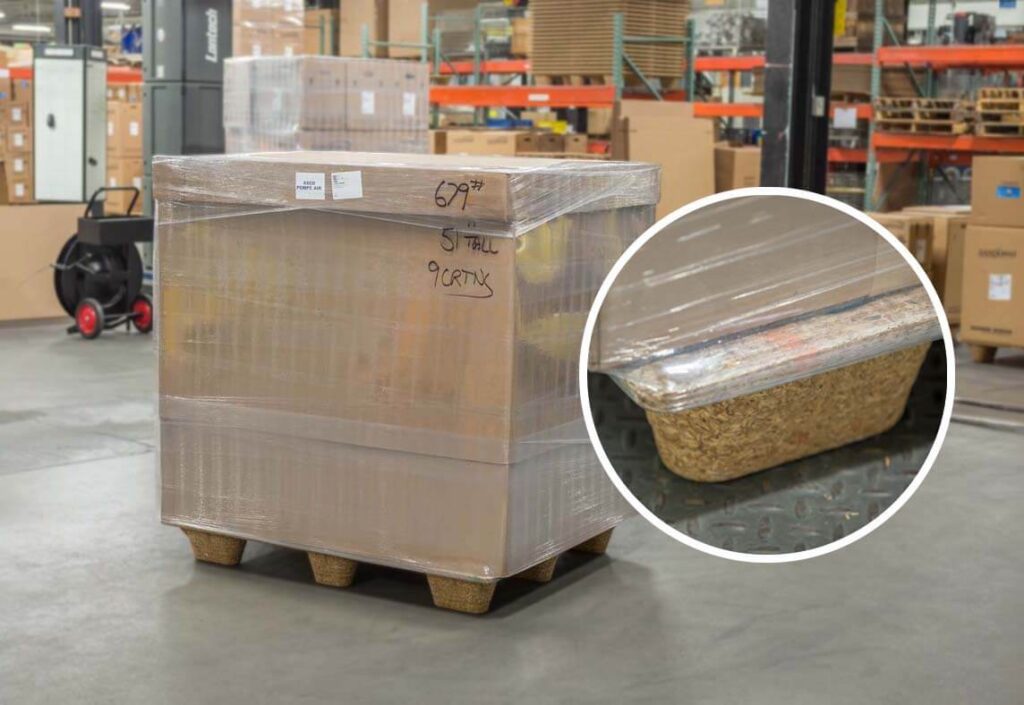
Litco’s nail-free, splinter-free pressed wood pallets feature smooth, rounded edges that help reduce cuts, punctures and snags during handling.
Why Stiffer Pallets Equal Safer Operations
One of the most important – and often overlooked – measures of pallet performance is stiffness, or how much a pallet bends and flexes under load.
Strength determines how much weight a pallet can support before failing; stiffness determines how well it maintains its shape while carrying that weight. Excessive flex can contribute to package compression, load instability, and product movement during handling and transport. A stiffer pallet provides a more stable foundation for the load. When paired with proper packaging, dunnage, load distribution, and securement, it supports a safer, more stable unit-load system.
Safety Benefits of Stiffer Pallets
- Stability during forklift movement: Prevents tipping and wobbling loads.
- Reduced compression of packaged product: Protects packaging and reduces product loss.
- Minimized vibration stress: Reduces risk of product shifting during transport.
- Improved resistance to load shift: Keeps shipments stable from origin to destination.
- Reduced vertical vibration effects: Minimizes product compression and packaging damage.
Testing by Virginia Tech found that Litco’s Inca Engineered Molded Wood® pallets are twice as stiff as new hardwood pallets. This added stiffness provides more consistent load support, helping improve safety for warehouse workers and others throughout the distribution chain.
Proven Performance: Field Results
Companies across industries have improved their distribution operations by switching to Litco pressed wood pallets. In one example, Wonderful Pistachios achieved measurable results by using Litco pallets for its retail display program:
- Reduced damage and waste: Litco’s stronger, stiffer pallets cut display damage and product loss, so more displays arrived retail-ready and protected through transit.
- Improved operational efficiency: Litco and Wonderful Pistachios developed a hot-melt gluing and strapping process that cut packaging time and labor while improving unitization, helping protect displays from transit damage.
- Improved worker safety and retail floor protection: The nail-free, splinter-free pallets reduced common handling hazards for warehouse and retail employees and helped prevent scratches on retail floors.
- Transportation savings: The nestable design enabled Wonderful Pistachios to ship 4,200 pallets per truckload, more than four times the 1,000 recycled stringer pallets, requiring fewer shipments and reducing freight costs and associated emissions.
- Retail expansion: Originally developed for limited retail distribution, the Litco quarter pallets performed so well that the program expanded nationwide.”
This case study shows how better pallet design can improve efficiency, reduce costs, and reduce risk for the people handling these loads every day.
Key Considerations When Choosing a Pallet Design
When evaluating pallet designs, managers should weigh more than just upfront cost. Worker safety, load stability, durability, and sustainability all contribute to a pallet’s overall value.
- Worker Safety: Look for pallets without nails, sharp edges, or loose splinters.
- Load Stability: Greater stiffness reduces pallet flex and provides more consistent support under load.
- Durability: Resistance to fork and edge damage can extend pallet life and reduce replacements.
- Compliance: Verified ASTM load ratings provide confidence that a pallet can safely support its intended load.
- Sustainability: Consider recycled content, recyclability, and efficient use of materials and transportation space.
- Supply Chain Versatility: Pallets should perform well across warehouses, transportation, and retail environments.
Litco’s pressed wood pallets are built around these priorities, offering a strong balance of performance, safety, sustainability, and cost efficiency.
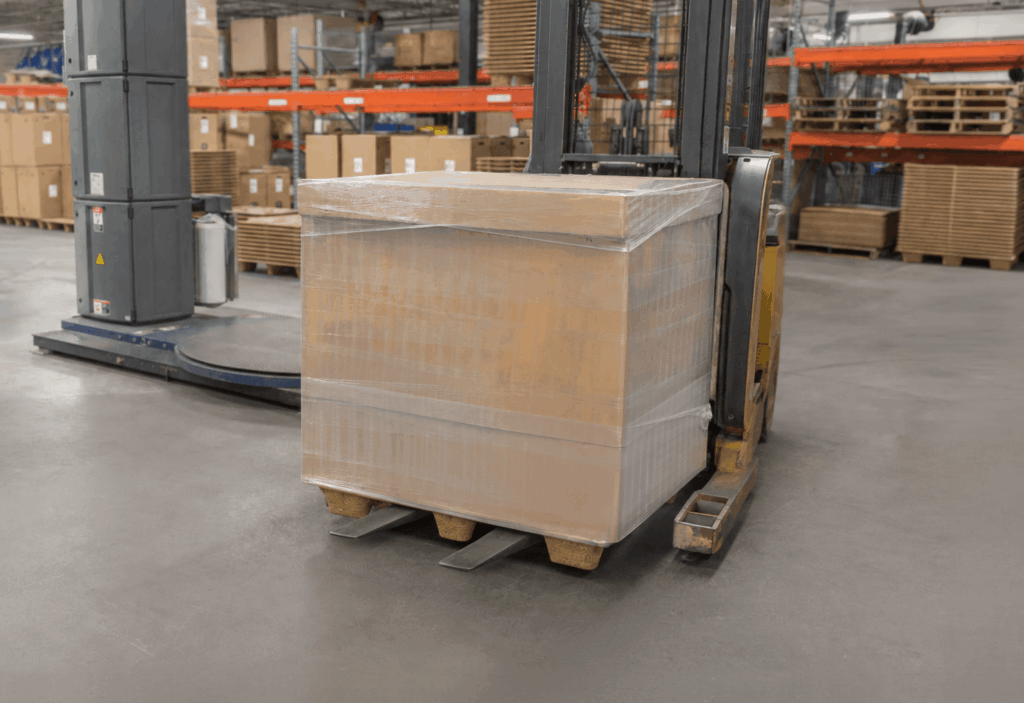
Litco’s pressed wood pallets combine high stiffness with a uniform deck surface to help maintain safety for warehouse workers during shipping and handling.
Safety Tips for Warehouse Workers: Handling and Transport Best Practices
Even with safer pallets, proper handling and load securement remain essential. The following practices can help protect warehouse workers, drivers, and others throughout the distribution chain:
- Distribute weight evenly: Place heaviest items at the bottom and center to maintain a low, balanced center of gravity.
- Use appropriate cargo restraints: Secure loads with straps, chains, netting, or other restraints suited to the cargo and rated for the required Working Load Limit (WLL).
- Fill gaps and voids: Use properly sized airbags or corrugated void fill to limit movement. Depending on the size and location of the gap, options may include Litco’s Center Drop or Dual Drop void fillers, Bulkhead Panels, or LITLoad® Cargo Separators.
- Inspect equipment and loads: Check pallets, restraints, and securement devices before departure and at required intervals during transport.
- Drive defensively: Controlled acceleration, gradual braking, and slow, careful turns help reduce the forces that cause loads to shift.
Knowing best practices even after you choose the right pallet design is essential when it comes to keeping your operation running smoothly, and to safety for warehouse workers in any part of your distribution chain.
A Safer Workforce, A Stronger Supply Chain
Safety for warehouse workers is closely connected to pallet design. Damaged or poorly designed pallets can contribute to injuries, operational delays, and product loss. Safer pallets, by contrast, support more efficient handling, fewer disruptions, and long-term cost savings.
Litco’s Inca Engineered Molded Wood® pallets are tested and proven to reduce common handling hazards and provide a strong, stable foundation for properly secured loads. From warehouses and transportation fleets to retail POP environments, they support safer handling throughout the distribution chain.
When employees can handle loads more safely and efficiently, the entire operation benefits.
Read a Case Study
Wonderful® Pistachios, America’s top-selling snack nut, was experiencing shipping damage to its seasonal point-of-purchase (POP) displays. The primary cause: unreliable recycled wooden stringer pallets.
Choose the Right Pallet – Choose Litco
Whether you manage a high-volume warehouse, an export operation, or retail logistics, the right pallet makes all the difference. It protects your product, streamlines your workflow, and safeguards your people. For organizations focused on reliability and long-term performance, durable pallets are an essential part of an efficient supply chain.
Litco’s pressed wood pallets provide all that – and more. Backed by data, built for durability, and linked to authoritative labs and compliance standards, they’re the smarter, safer, and more sustainable way to move your business forward.
Choose the right pallet. Choose science. Choose Litco.

Worker Safety and Pallet Design FAQs
What is the biggest safety risk traditional wood pallets pose to warehouse workers?
Protruding nails, splintered boards, and structural failure from repaired pallets, which cause hand lacerations, puncture injuries, and load collapses.
Traditional GMA-style wood pallets can degrade over repeated use cycles. Nails may loosen and protrude through deck boards, while lumber can dry out and splinter. Repeatedly repaired pallets may also lose structural integrity, increasing the risk of failure under load. These conditions can cause cuts and glove punctures. Pallet weight adds another concern: standard designs typically weigh 30–50 pounds, while heavier, higher-density pallets may weigh 40–60 pounds. Repeated lifting can increase the risk of strain, especially in high-volume operations with thousands of pallet touches per shift.
Does OSHA set a weight limit for one-person pallet lifts?
OSHA does not set a universal lifting limit, but it references the NIOSH Lifting Equation, which recommends a maximum of 51 pounds for a single-person lift under ideal conditions.
OSHA’s guidance on safe lifting defers to NIOSH and CDC research rather than setting its own hard weight cap. The NIOSH Revised Lifting Equation sets 51 pounds as the recommended weight limit when posture, grip, frequency, and distance are all optimal. Standard GMA wood pallets typically weigh 30–50 pounds, while heavier, higher-density pallets may weigh 40–60 pounds. Some can exceed NIOSH’s recommended limit for an ideal single-person lift, making two-person lifting or mechanical assistance the safer option.
How do I choose the right pallet design for warehouse safety?
Prioritize pallets with no nails or fasteners, smooth surfaces, verified ASTM load ratings, high stiffness, and a weight under 51 pounds for safe single-person handling.
The right pallet minimizes injury risk at every touchpoint. Nail-free, splinter-free construction eliminates the most common hand and arm injuries. High stiffness (low deflection under load) prevents product shifting during forklift movement and transport. ASTM-verified load ratings give confidence that a pallet won’t fail under rated weight. And keeping pallet weight below the NIOSH 51-pound threshold ensures any worker can safely lift and position the pallet without assistance, reducing cumulative strain over a full shift.
What safety tips for warehouse workers should I implement alongside safer pallets?
Distribute weight carefully, secure loads with properly rated restraints, fill voids with appropriate dunnage, inspect pallets and securement devices, and train forklift operators and drivers in smooth handling techniques.
A safer pallet is an important starting point, but proper load-building and handling practices remain essential. Place heavier items at the bottom and near the center to maintain a low, balanced center of gravity. Use straps, chains, netting, or other restraints suited to the cargo and rated for the required Working Load Limit. Fill and control voids with properly sized airbags or corrugated void fill to limit lateral movement. Inspect pallets, straps, and other securement devices before departure and at required intervals during transport. Train forklift operators and drivers to use controlled acceleration, gradual braking, and slow, careful turns to reduce shifting forces throughout the distribution chain.
Are pressed wood pallets strong enough to replace traditional nailed pallets?
For many applications, yes. Litco’s pressed wood pallets support 2,500 pounds dynamic and 7,500 pounds static.
Independent testing by the Center for Packaging and Unit Load Design at Virginia Tech compared Litco’s pallets with new and repaired 48 × 40-inch GMA-style pallets. The testing found that Litco’s pallets were twice as stiff as new hardwood pallets and offered 52% greater resistance to fork damage. Their molded, single-piece construction contains no joints or fasteners, reducing common failure points found in traditional pallets.