ARTICLE
6 Clear Benefits of Pressed Wood Pallets for Point of Purchase Displays
Table of Contents
“From the moment a display leaves the warehouse until it’s set up in-store, pallet performance determines how well it survives the journey. Without the right base, even the best-looking display is at risk.”
“A Virginia Tech study compared Litco’s Inca-brand Engineered Molded Wood™ pallets to standard GMA-style new and repaired pallets. The results were clear: Litco pallets are stronger, more durable, and nearly twice as stiff.”
Read a Case Study
Wonderful® Pistachios, America’s top-selling snack nut, was experiencing shipping damage to its seasonal point-of-purchase (POP) displays. The primary cause: unreliable recycled wooden stringer pallets.
“The difference is dramatic. Fifty pressed wood pallets fit in just 8 feet of vertical space. On the road, that means up to 4,200 Litco pallets can move in a single truckload—compared to only 1,000 traditional pallets.”
March 12, 2026
8 Minute Read
Your point of purchase displays are meant to drive sales, not setbacks. But put them on unreliable pallets, and the costs start adding up fast: damaged products, safety risks, and strained supply chain partnerships.
It’s easy to focus on the design of a point of purchase display and overlook the pallet beneath it. Yet that pallet plays a bigger role than most people realize. From the moment a display leaves the warehouse until it’s set up in-store, pallet performance determines how well it survives the journey.
Without the right base, even the best-looking display is at risk. Simply put, a point of purchase display is only as strong as the pallet that supports it—which is why choosing the right pallet matters.
That’s where pressed wood pallets come in. Built for dependability, they deliver the protection and durability point of purchase displays require at every stage of the supply chain. Here are six advantages that set them apart from traditional wood or plastic pallets.
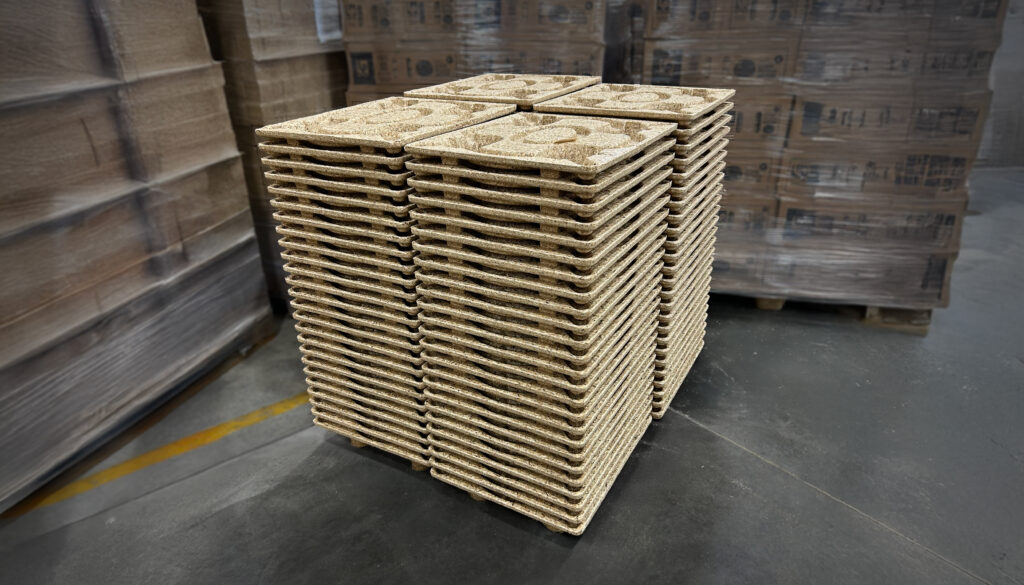
Pressed wood pallets feature a uniform, nestable design that allows dozens of pallets to stack tightly together, reducing storage space and freight costs.
1. Durable Performance Backed by Science
If you’ve ever had wood pallets fail in transit, you know the fallout—shifted loads, damaged product, wasted resources, and unhappy customers.
Pressed wood pallets change that. A Virginia Tech study compared Litco’s Inca-brand Engineered Molded Wood™ pallets to standard GMA-style new and repaired pallets. The results were clear: Litco pallets are stronger, more durable, and nearly twice as stiff. See the full test results here.
Why does stiffness matter? A stiffer pallet resists flexing, keeps its shape under heavy loads, and distributes weight more evenly. That means steadier handling on forklifts, less vibration during transit, and stronger support to prevent load shifting or breakage.
The same study also showed Litco pallets are 50% more resistant to impacts and forklift damage. And in real-world use (as Wonderful® Pistachios experienced), they’re built to withstand the rigors of the supply chain—supporting up to 2,500 lbs dynamically and 7,500 lbs statically without bending or breaking.
2. Sustainability That Strengthens Your ESG Score
Sustainability isn’t a side issue anymore—it’s front and center. Today’s end-users, retailers, and investors are scrutinizing ESG performance more closely than ever. Your “green score” is no longer optional. It’s a core part of your brand’s reputation—and in many cases, a requirement in CPG and retail contracts.
The problem? Traditional pallets can fall short. Virgin-lumber pallets require intensive logging and energy for manufacturing, treatment, and transport—putting pressure on natural resources. Plastic pallets may last longer, but they typically carry a heavier carbon footprint and create end-of-life disposal challenges.
Litco’s pressed wood pallets offer a better path forward. Made from recycled wood fiber and pre- and post-consumer wood waste, they transform discarded material into a valuable resource. And when their job is done, they can be repurposed into mulch, compost, boiler fuel, and other products—closing the loop and ensuring that nothing goes to waste.
In addition to this circular approach, Litco pallets deliver additional benefits across the supply chain:
- Certified Sustainability: Engineered Molded Wood® pallets are certified by both the Cradle to Cradle® and USDA BioPreferred® programs. These certifications assure buyers that Litco pallets are independently verified as sustainable, support the principles of a circular economy, and help companies align with ESG reporting requirements and sustainability standards.
- A Green Score Boost: By choosing pallets made from recycled wood fiber, you reduce waste streams and lower your carbon footprint—a measurable gain for your sustainability scorecard.
- Built-In Efficiency: With their Engineered Molded Wood design, Litco pallets are stronger by construction—reducing load damage and waste, and lowering lifecycle costs for a more sustainable supply chain.
Brand owners and retailers have told us they value the way Litco pallets not only protect their POP displays but also strengthen their reputations for responsible, sustainable operations. That’s value that extends beyond logistics—it builds credibility across your entire business.
Learn more about Litco’s Cradle to Cradle® and USDA BioPreferred® certifications.
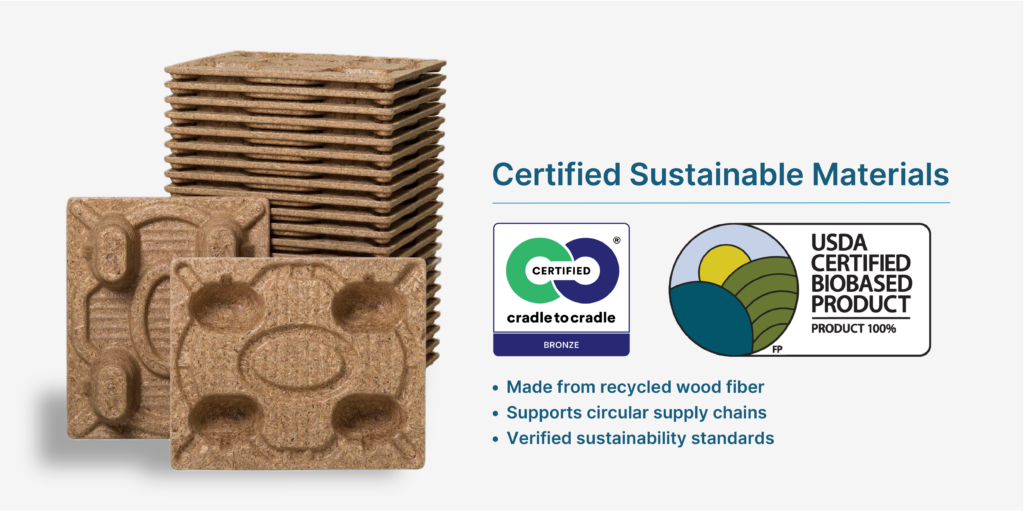
Litco pressed wood pallets are made from recycled wood fiber and backed by third-party certifications, including Cradle to Cradle Certified® and USDA Certified Biobased Product, supporting circular supply chains and verified sustainability standards.
Read a Case Study
Wonderful® Pistachios, America’s top-selling snack nut, was experiencing shipping damage to its seasonal point-of-purchase (POP) displays. The primary cause: unreliable recycled wooden stringer pallets.
3. Strong Support Across Your Supply Chain
Introducing a new pallet into your supply chain can raise real concerns. If something is off, your distribution and logistics partners feel the impact right away. Left unresolved, those problems can result in damaged products and a possible loss of accounts.
These were some of the challenges Litco helped solve for one of America’s leading snack brands. Wonderful® Pistachios was experiencing shipping damage to its seasonal POP displays due to unreliable recycled wooden stringer pallets. They began with a small pilot program using Litco pressed wood pallets, and the results were immediate—warehouse workers, distributors, and retailers all reported fewer issues, safer handling, and less damage to displays and retail floors. Based on that response, Wonderful® expanded adoption across the entire East Coast. Today, they continue to rely on Litco as a trusted supply chain partner.
4. Splinter & Nail-Free Protection
For brand owners, manufacturers, and retailers, damaged products and scratched floors from nails or splinters are more than minor inconveniences. They can erode consumer trust, harm your brand’s reputation, and lead to costly repairs or write-offs.
Traditional pallets are notorious for creating exactly these problems. Nails can snag and tear display packaging, while splinters scrape and scratch retail flooring, leaving both your products and your shop floor looking worse for wear.
Litco’s Inca Engineered Molded Wood® pallets eliminate these issues with their smooth, nail-free design. The pressed wood construction offers a stable, reliable platform that minimizes the risk of packaging tears, surface scratches, or floor damage.
The result? Your point of purchase displays will arrive and remain retail-ready, protecting both your investment and your brand. Safeguarding your products and store environment translates directly into stronger customer impressions and higher sales. In other words: precisely what your point of purchase displays are meant to achieve.
Learn more about pressed wood pallet protection benefits here.
5. Safer Handling, Safer Teams
For those managing warehouses, distribution centers, or field operations, safety is paramount. Heavy wood pallets can pose hidden dangers: nails that jut out can puncture hands and gloves, while splintered wood can cause painful injuries. These risks can slow down your loading crews, raise comp claims, and reduce overall productivity.
Litco’s Inca Engineered Molded Wood® pallets can effectively solve these safety problems. Made from recycled food fiber and pressed into a smooth, uniform surface, they are nail-free, with no sharp edges or loose splinters.
That means your team can handle them with confidence and work more efficiently – without worrying about injury or unnecessary hazards. A safer workspace means a more dependable workforce, and when your employees feel protected, your entire distribution chain benefits.
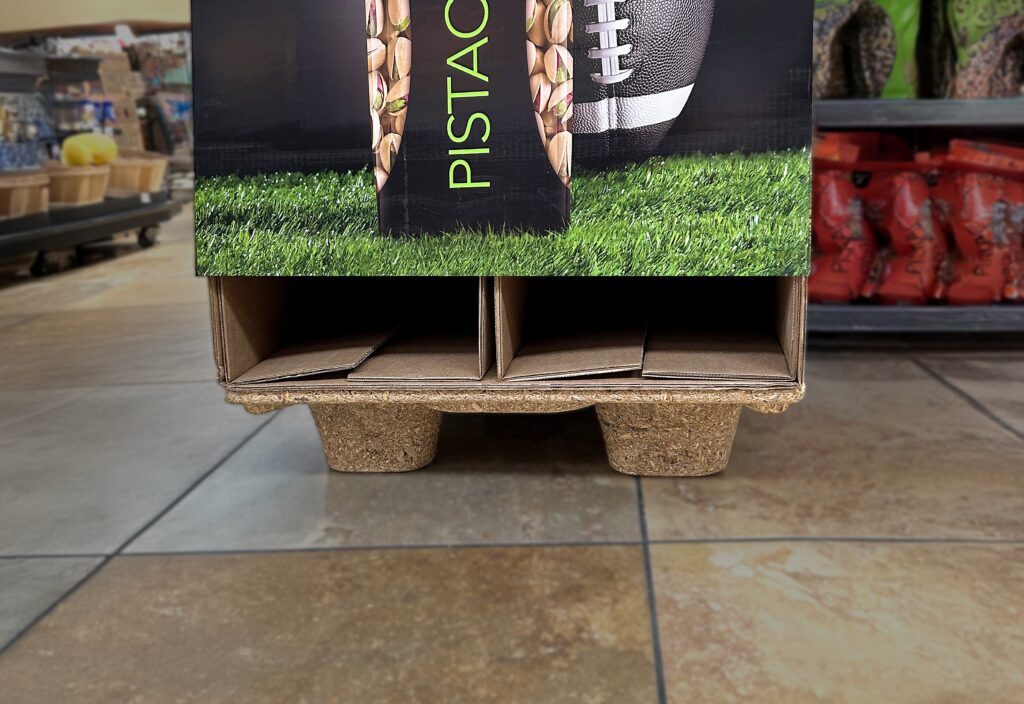
Pressed wood pallets feature a smooth, nail-free surface that protects retail flooring and keeps point of purchase displays stable during in-store setup and merchandising.
6. Space Efficiency That Cuts Cost
In logistics, every square inch matters. Storage and shipping space cost money, and bulky wood or plastic pallets eat into that space fast. They stack unevenly, become unstable after just a few layers, and make cube-out planning a constant headache. The result? Wasted space and higher freight costs.
Litco’s Inca Engineered Molded Wood® pallets solve this with a uniform, nestable design and true four-way entry. Each pallet is identical, so they stack snugly and securely, maximizing cube-out efficiency in both storage and transit.
The difference is dramatic. Fifty pressed wood pallets fit in just 8 feet of vertical space. On the road, that means up to 4,200 Litco pallets can move in a single truckload—compared to only 1,000 traditional pallets.
This level of efficiency doesn’t just cut storage and freight costs—it streamlines your entire logistics process. With a nestable design, consistent dimensions, and true four-way entry, your operations can flow smoothly, saving time and reducing disruptions across your supply chain.
Nestability in action. See how the compact, nestable design of Litco pressed wood pallets helps warehouses save space and operate more efficiently.
Pressed Wood Pallets: The Reliable Choice for Point of Purchase Displays
The right pallet impacts more than just shipping—it shapes your bottom line, brand reputation, and even worker safety. Litco’s pressed wood pallets are strong, safe, space-efficient, and trusted across distribution channels. They tackle the common challenges of retail and logistics head-on, making them the smart choice for your point of purchase displays.
At Litco, we’re committed to understanding your challenges and delivering solutions that fit. Our pallets—and our people—provide simple, reliable, and cost-effective ways to protect your displays and strengthen your supply chain. Contact a specialist today to see how we can help with your transit protection and load securement needs.
Your POP Display Deserves a Better Pallet
Don’t let a weak pallet undermine your POP investment. From warehouse assembly to distribution and the sales floor, Litco’s pressed wood pallets protect displays through shipping, handling, and in-store setup. That’s why national brands like Wonderful® Pistachios trust Litco with their Point-of-Purchase displays.
See the difference for yourself—request a sample today.
Commonly Asked Questions
How Do Pallets Affect Point of Purchase Display Shipping Damage?
The pallet supporting a POP display plays a major role in whether the display arrives safely or becomes damaged in transit.
When pallets flex, break, or allow loads to shift, point of purchase displays are more likely to experience product damage, packaging tears, or structural failure. Pressed wood pallets are designed to provide consistent strength and stiffness, helping keep displays stable during forklift handling and transportation. A stronger pallet base reduces vibration, load shifting, and impact damage throughout the supply chain.
Why Are Nail-Free Pallets Better for Retail Displays?
Nail-free pallets help prevent damage to packaging, retail flooring, and point of purchase displays.
Traditional wooden pallets often contain protruding nails or splintered boards that can tear display packaging or scratch store floors during setup. Pressed wood pallets eliminate those risks with a seamless, one-piece design that contains no nails or loose wood fibers. This smoother surface helps protect both the product display and the retail environment while improving safety for workers handling the pallets.
Can Pallet Design Improve Warehouse Safety?
Yes, pallet design can reduce injury risks for warehouse teams handling heavy shipments.
Traditional wood pallets can create hazards such as exposed nails, splinters, or broken boards that may puncture gloves or cause cuts during handling. Pressed wood pallets are manufactured as a uniform molded structure with no nails or sharp edges. This smooth surface helps reduce common workplace injuries and allows warehouse teams to move displays and shipments more safely and efficiently.
How Do Nestable Pallets Reduce Shipping Costs?
Nestable pallets reduce transportation and storage costs by allowing more pallets to fit in the same amount of space.
Pressed wood pallets are designed to nest tightly together when empty, unlike traditional pallets that stack unevenly. Because they occupy less vertical space, significantly more pallets can fit into a trailer or warehouse storage area. This increased pallet density helps reduce freight costs, improve cube-out efficiency, and free up valuable warehouse space for staging and inventory.
What Makes Pressed Wood Pallets Stronger Than Traditional Pallets?
Pressed wood pallets are engineered to provide greater stiffness and durability compared to many traditional pallets.
Research comparing engineered molded wood pallets to standard GMA-style pallets found that pressed wood pallets are stronger, more resistant to impacts, and nearly twice as stiff. Greater stiffness helps pallets resist bending and flexing under heavy loads, which improves load stability during handling and transport. This added strength helps prevent damage to point of purchase displays and other retail shipments moving through the supply chain.