ARTICLE
Still Getting Transit Damage Despite Using Airbags?
4 Proven Ways to Fix It
Why Corrugated Load Securement Solutions Can Help Reduce Shipping Damage and Improve Load Stability
ARTICLE
Still Getting Transit Damage Despite Using Airbags? 4 Proven Ways to Fix It
Why Corrugated Load Securement Solutions Can Help Reduce Shipping Damage and Improve Load Stability
Table of Contents
“The most effective load securement strategy isn’t necessarily the one that uses the most products; it’s the one that best fits the way your freight is actually shipped.”
“In reality, successful load securement is a system.”
— Jeff Swogger, Product Protection Specialist
“Different shipments create different movement challenges, and those challenges call for different solutions. Finding the right solution begins with understanding the application, not making assumptions.”
Read a Case Study
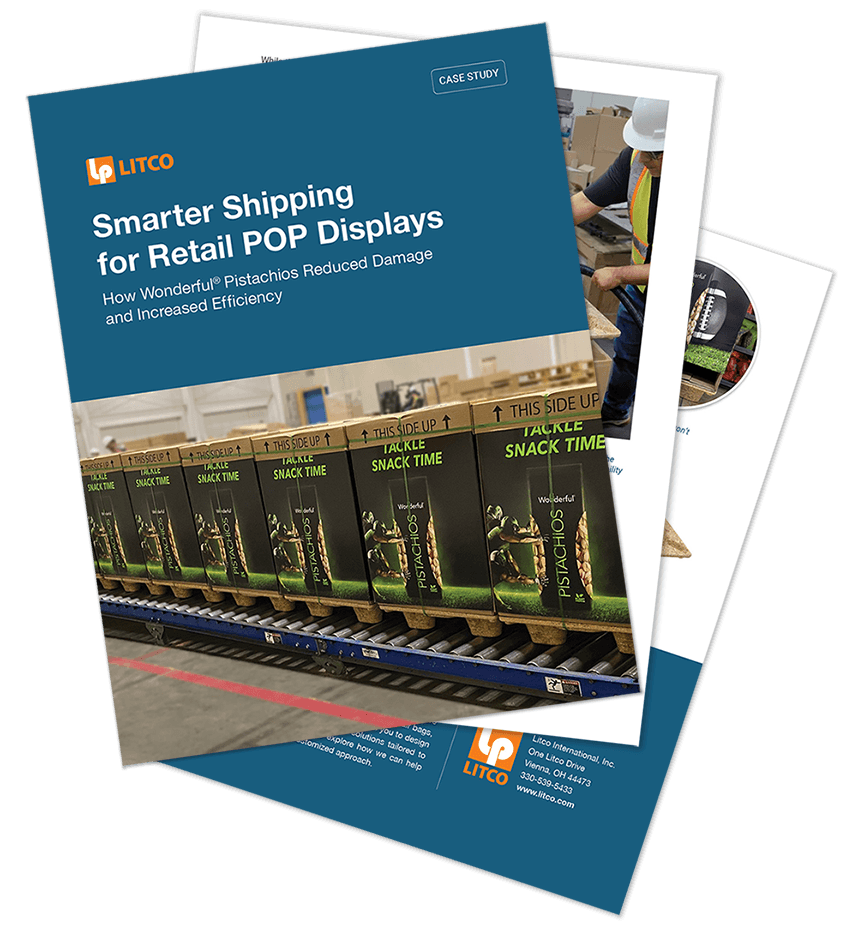
Wonderful® Pistachios, America’s top-selling snack nut, was experiencing shipping damage to its seasonal point-of-purchase (POP) displays. The primary cause: unreliable recycled wooden stringer pallets.
“For many operations, airbags remain an important part of the solution alongside complementary products designed to address specific movement challenges.”
“Nearly two decades later, the relationship continues because the partnership solved more than a shipping problem: it helped improve the customer’s overall operation.”
August 4th, 2026
12 Minute Read
If you’re using airbags but still experiencing transit damage, the problem may not be the airbag itself. It may be the void size, installation method, air pressure, or the way the airbag interacts with the rest of the load. In some applications, airbags simply need additional blocking and bracing to control cargo movement effectively.
Recurring shipping damage is often a sign that the load securement system doesn’t match the application. Every load behaves differently based on its weight, how it’s packaged and loaded, and the equipment used to transport it. Changes in temperature, humidity, or elevation can further affect how freight moves in transit.
That’s why preventing transit damage rarely comes down to replacing one product with another. It starts with identifying where and why the load is shifting, then engineering a load securement strategy around the specific application and shipping conditions. The right combination of products, proper application, and employee training can help reduce transit damage while improving consistency and efficiency at the loading dock.
This article breaks down why airbags sometimes underperform and how corrugated load securement solutions can provide additional support. These solutions include Litco’s Center and Dual Drop Void Fillers, Bulkhead Panels, and LITLoad® Cargo Separators. Depending on the application, they can be used with or instead of airbags to reduce shipping damage and improve load stability.
Most people assume freight damage begins with rough roads or careless drivers. In reality, transit damage often starts much earlier: with movement inside the trailer, railcar, or container itself. That movement or shifting is the most common cause of transit damage.
Every acceleration, stop, lane change, and vibration places force on a shipment. If cargo has room to move, those forces compound throughout the trip. Over hundreds of miles, even relatively small shifts can damage packaging, crush products, destabilize loads, or lead to rejected shipments.
For shipping, warehouse, and operations managers, understanding this distinction is important. Preventing damage isn’t simply about surviving the journey. It’s about eliminating opportunities for cargo to move before the truck, railcar, or container begins its journey.
Long distances alone don’t create damaged freight. Unfilled voids, gaps, and empty spaces give cargo room to move, turning a stable load into transit-damaged freight.
What Is Transit Damage?
Transit damage refers to damage that occurs while products are transported between facilities, distribution centers, or customers. The resulting transit damaged freight may be caused by shifting cargo, excessive void space, inadequate blocking and bracing, improper load securement, or the normal forces of transportation acting on an unstable load.
The most common cause of transit damage is empty space.
Whenever cargo has room to shift inside a trailer, railcar, or intermodal container, the likelihood of damage increases. Lateral and longitudinal voids, unstable unit loads, and poorly planned loading patterns all create opportunities for movement that can damage an entire shipment.
The risk extends beyond individual products. Transit damage threatens the value your entire team has created before the shipment ever reaches the loading dock. Before a shipment ever reaches the loading dock, materials have been sourced, products have been manufactured, quality inspections have been completed, and warehouse teams have carefully prepared every order.
That preparation is why a damaged shipment represents far more than broken products: it represents wasted manufacturing effort, additional warehouse labor, replacement costs, scheduling disruptions, and unnecessary strain on customer relationships.
Because the effects continue long after the damaged freight has been unloaded, protecting freight also means protecting the people, processes, and investments behind every shipment.
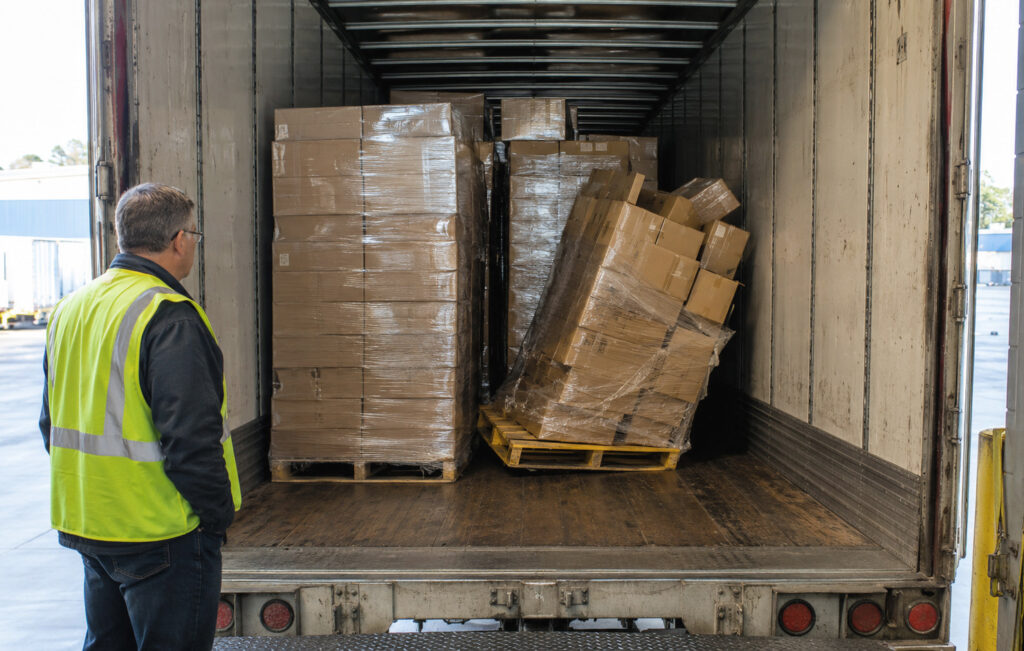
Unfilled voids give cargo room to shift, putting the entire shipment and the work behind it at risk.
Now that we’ve established cargo movement as a primary cause of transit damage, an important question remains:
“Why aren’t the load securement products I’m already using working?”
One of the biggest misconceptions about load securement is that one securement product alone will solve every shipping challenge. In reality, successful load securement is a system.
Stretch wrap provides a simple example. When applied correctly, it helps stabilize products by securing them to the pallet itself. However, if it’s wrapped only around the products and not anchored to the pallet, even high-quality stretch wrap can’t perform the job it was designed to do. The issue isn’t the stretch wrap. It’s how the stretch wrap is being applied.
The same principle applies throughout load securement more generally: airbags, corrugated load securement products, and blocking and bracing systems all have important roles to play. But no product performs at its best when it’s applied incorrectly or used in situations it wasn’t designed to address.
That’s why experienced load securement specialists at Litco don’t begin by recommending products. They begin by asking questions to better understand the customer’s application:
- How large are the voids?
- How far is the shipment traveling?
- How much does the shipment weigh?
- What type of trailer or railcar is being used?
- What kinds of forces will it experience along the way?
The answers to those types of questions shape the right securement strategy. No individual product, purchased in isolation, can do that.
Why Airbags Sometimes Underperform
Vinyl airbags have been a trusted part of load securement for decades, and for good reason. When selected correctly, matched to the appropriate void size, and installed properly, they remain an excellent solution for many shipping applications.
Yet recurring transit damage doesn’t necessarily mean the airbag itself has failed. The issue may be the void size, the airbag specification, the installation, or the shipping environment. In some cases, the shipment simply requires additional blocking and bracing to control movement more effectively.
Recently, Litco worked with companies that were using airbags to secure beverages and produce, but were still experiencing transit damage. In each case, the first step wasn’t replacing airbags with another load securement product; it was understanding how their loads were being secured, identifying where movement was occurring, and then proposing a combination of load securement solutions to best fit their application.
Different shipments create different movement challenges, and those challenges call for different solutions. Finding the right solution begins with understanding the application, not making assumptions.
Temperature, Elevation, and Airbag Performance Matter More Than You May Realize
Even when the correct airbag has been selected and installed properly, the journey itself can introduce variables that affect load securement.
Temperature changes and elevation shifts both influence the pressure inside an inflated airbag. As trailers, railcars, and containers move through different climates, elevations, and weather conditions, the pressure inside the bag changes as well. A shipment that leaves the dock properly secured may arrive with significantly less airbag pressure because environmental conditions changed during transit.
According to Litco’s field experience, every 32°F change in temperature can change an airbag’s internal pressure by approximately 1 PSI. Likewise, approximately every 2,000 feet of elevation change can also affect air pressure. These changes may seem small, but they can add up significantly over long shipping distances, or when combined with oversized voids and heavy products.
This is another reason successful load securement depends on understanding the customer’s application, not simply selecting a product and presuming it works.
For companies shipping across multiple climate zones, through mountainous regions, or over long rail routes, these environmental factors must be considered together with void size, product weight, and trailer configuration. There is never a one-size-fits-all solution.
Did You Know?
Airbags aren’t designed to compensate for every shipping variable on their own. Temperature changes, elevation shifts, oversized voids, and improper installation can influence performance. Evaluating these factors together often leads to a more reliable load securement strategy than relying on any single product alone.

As freight travels through shifting temperatures and elevations, airbag pressure can change, weakening load securement and raising the risk of product damage.
Read a Case Study
Wonderful® Pistachios, America’s top-selling snack nut, was experiencing shipping damage to its seasonal point-of-purchase (POP) displays. The primary cause: unreliable recycled wooden stringer pallets.
Assessment Comes Before the Right Solution
Understanding these variables is one reason Litco approaches load securement differently than simply recommending products from a catalog.
As Jeff Swogger, Product Protection Specialist, says,
“You can’t sell dunnage from a desk. Field engagement is essential.”
That philosophy shapes every customer relationship.
Two companies may ship products that appear nearly identical yet require completely different securement strategies. Product weight, pallet configuration, shipping lanes, trailer types, void dimensions, loading practices, and environmental conditions all affect how cargo behaves during transit.
That’s why Litco begins by understanding the customer’s application firsthand before recommending a solution.
Rather than assuming which products will work best, Litco’s field specialists visit customer facilities to observe loading practices in person, measure voids, evaluate product configurations, and identify where movement may occur. Those visits aren’t separate consulting engagements. They’re part of Litco’s commitment to helping customers implement the right solution correctly from the beginning.
Just as importantly, those visits include hands-on education. The objective isn’t simply to recommend products; it’s to help warehouse teams understand why certain securement methods work for specific applications, and how to apply them correctly. That educational approach helps customers get the best possible performance from the products they have invested in.
Load Securement Starts with Understanding
Preventing transit damage isn’t usually about one product.
Successful shipments often begin with four simple steps:
- Understand why cargo is moving.
- Evaluate the customer’s application and shipping environment.
- Determine the right combination of load securement methods.
- Train teams to apply those solutions consistently.
Products are certainly part of the equation, but understanding the application always comes first.
Matching the Right Load Securement Solution to the Right Shipping Challenge
As we’ve established, once the customer’s application has been evaluated, the next step isn’t choosing the most popular or convenient securement product. It’s determining a holistic load securement solution that directly addresses the type of movement occurring within that specific shipment.
Because every shipping environment is different, the right recommendation depends on factors such as product weight, void dimensions, trailer configuration, shipping route, and loading practices. That’s why Litco always sends a team member to assess and create the right securement system for the application.
The following examples show how corrugated load securement solutions address common challenges Litco identifies during onsite evaluations.. These load securement products, often in conjunction with each other or airbags, can control cargo movement, improve load stability, and reduce transit and shipping damage.
When Large Center Voids Allow Loads to Shift
During onsite evaluations, oversized center voids are one of the most common movement challenges Litco identifies.
As trailers accelerate, brake, and turn, loads naturally seek the path of least resistance. If empty space exists between palletized loads, that movement can compound throughout the trip, increasing the likelihood of shipping damage.
After evaluating these loading conditions, Litco may recommend the Center Drop Void Filler to reduce oversized center voids and improve overall load stability. The expandable corrugated panel fills the space between unit loads, preventing side-to-side movement before it begins.
Center Drop Void Fillers install quickly, store flat between uses, and can be reused multiple times. That makes them an efficient option for operations looking to improve consistency while reducing unnecessary material usage.
For many customers, the recommendation isn’t simply about adding another product. It’s about matching the securement method to the way the shipment actually moves.
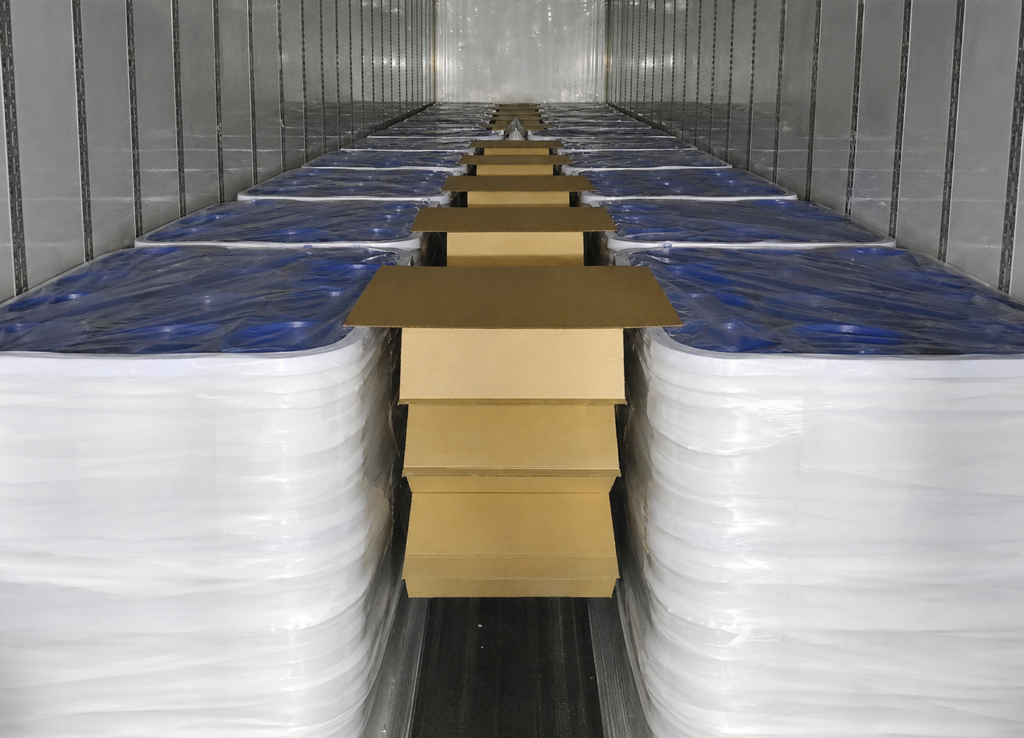
Litco’s Center Drop Void Filler fills the empty space between loads to prevent side-to-side movement, improve load stability, and reduce shipping damage.
When Single Pallet Loads Need Better Stability
Single pallet shipments create a different type of movement challenge.
With open space on both sides of the pallet, even properly packaged products can move side-to-side during transportation. That lateral movement not only increases the risk of transit damage, but can also affect overall trailer stability.
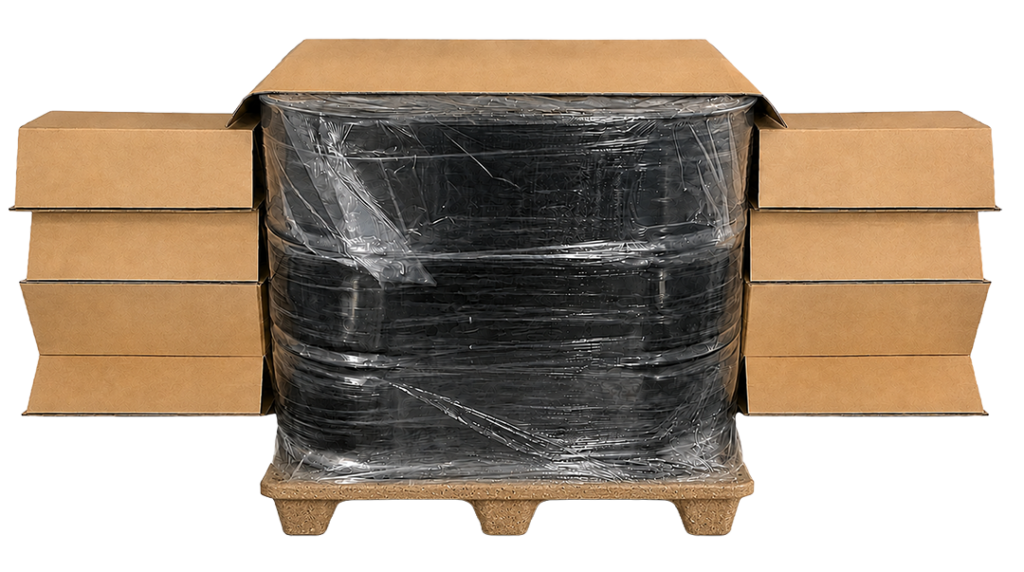
When Litco identifies this type of movement during an onsite evaluation, the Dual Drop Void Filler may be recommended. Designed specifically for single pallet applications, it expands on both sides of the load to help keep the shipment centered while maintaining proper axle weight distribution.
Rather than treating every shipment the same way, this approach addresses the specific movement challenge occurring within that application. For facilities shipping individual pallet loads every day, that often translates into greater consistency, improved stability, and fewer opportunities for damage during transit.
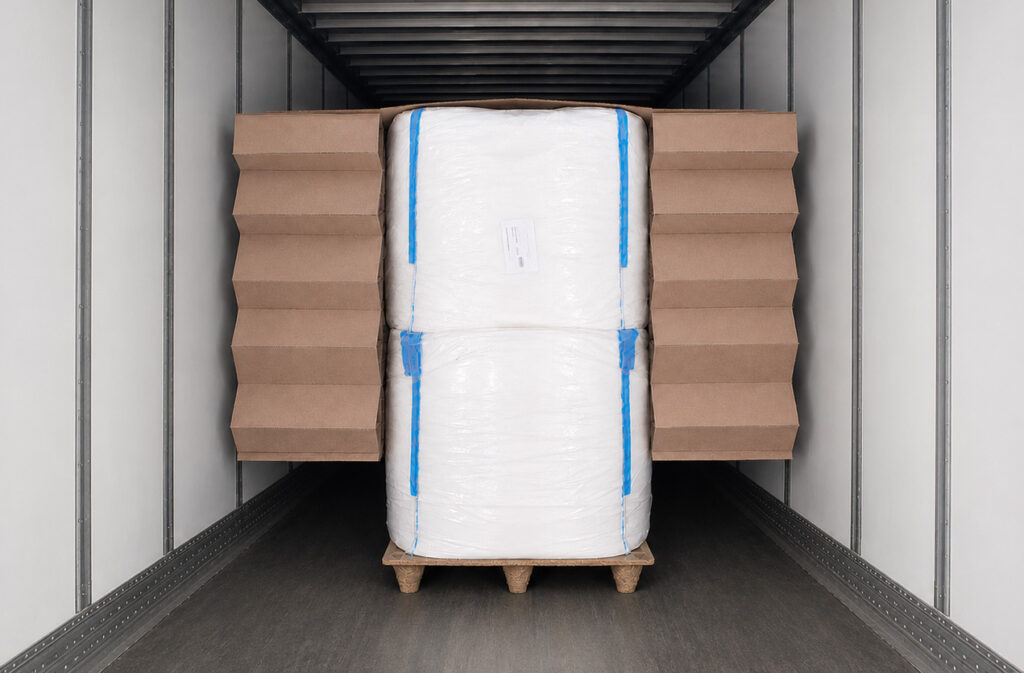
Litco’s Dual Drop Void Filler expands on both sides of a single pallet load, keeping it centered and limiting side-to-side movement. This helps maintain proper axle weight distribution and reduces the risk of transit damage.
When Airbags Need Additional Support
One of the biggest misconceptions surrounding load securement is that recurring damage automatically means airbags should be replaced.
Often, it doesn’t.
During onsite evaluations, Litco frequently discovers that airbags are being asked to perform beyond their intended application. Oversized voids, improper installation, or insufficient blocking and bracing can all reduce their effectiveness.
In these situations, Litco may recommend Bulkhead Panels as part of the overall securement strategy. Rather than replacing airbags, Bulkhead Panels can improve their performance by reducing excessive void space and providing a durable surface for airbags to press against. Their reinforced diamond-cell interior distributes pressure across the panel while helping control lateral movement throughout transit.
For many operations, airbags remain an important part of the solution alongside complementary products designed to address specific movement challenges.
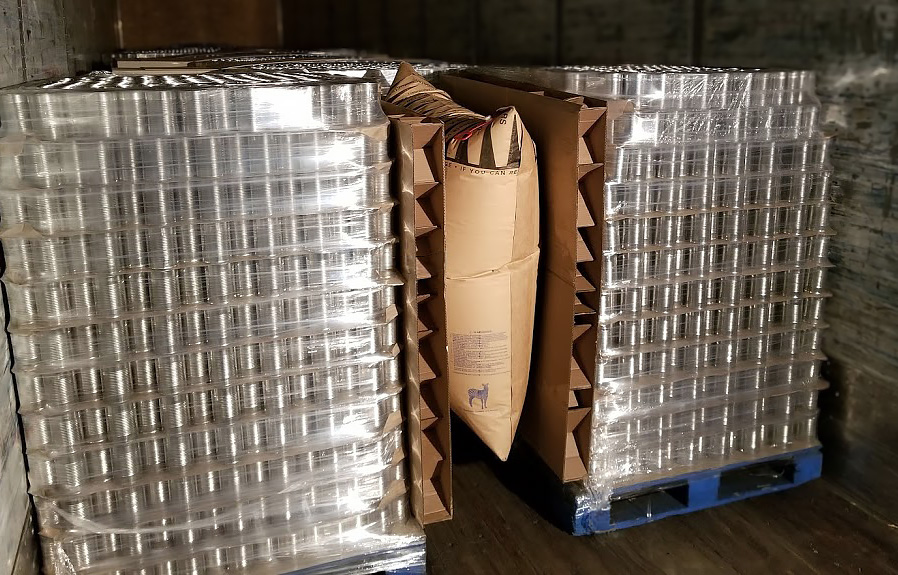
Litco’s reinforced Bulkhead Panels improve airbag performance by reducing oversized voids and giving airbags a flat, uniform surface to press against for even inflation. This limits lateral movement and improves load securement.
When Loads Need Separation or Stacking Support
Not every load securement challenge involves an oversized void. Some shipments require a stable layer between stacked drums or other containers. Others include step-down loads that need support to keep taller units from toppling onto shorter ones. When Litco identifies these conditions during an assessment, it may recommend the LITLoad® Cargo Separator.
Rather than functioning as a traditional void filler, the LITLoad® can serve as either a load separator or a layer separator. Placed between stacked layers or adjacent loads, it helps stabilize products and prevent forward and backward movement during transportation. Its reinforced corrugated construction provides a lightweight, splinter-free alternative to plywood and OSB while remaining durable enough for demanding shipping environments.
Approved by the Association of American Railroads (AAR), LITLoad® can be used in truck trailers, railcars, intermodal containers, and warehouses. It has also proven effective for protecting 55-gallon drums and supporting double- and triple-stacked products.
Like every recommendation Litco makes, selecting a cargo separator begins with understanding the customer’s application – not simply choosing a product from a catalog.

A Litco LITLoad® Cargo Separator helps prevent a higher unit from toppling forward onto the shorter unit, a common risk with step-down loads. Its reinforced construction provides stable support while remaining splinter-free, and easier to handle than plywood.
When the Right Securement Strategy Changes Everything
The principles explored throughout this article aren’t just theoretical. They’re the same principles Litco applies every time a customer reaches out for help with recurring transit damage.
One long-time customer, a leading North American building materials manufacturer, had relied heavily on airbags to secure heavy rail shipments. Despite those efforts, products continued arriving damaged. One shipping lane became so problematic that the receiving facility eventually asked the plant to stop shipping to them by rail altogether.
The airbags weren’t necessarily ineffective. The overall securement strategy simply didn’t match the customer’s application.
During an onsite evaluation, Litco’s field specialists observed the loading process, measured the oversized voids, and identified opportunities to improve the blocking and bracing system. Rather than recommending the customer abandon airbags, Litco designed a strategy that combined airbags with Bulkhead Panels, Drop Void Fillers, and other load securement solutions tailored to that shipping environment.
Just as importantly, Litco worked alongside the customer’s team during actual loading operations, demonstrating proper application techniques, training employees, and validating the new securement strategy through real shipments before broader implementation.
That collaborative process – including onsite evaluation, load design, and training – was provided at no additional cost because Litco believes successful load securement depends on more than supplying products.
The results spoke for themselves.
The high-damage shipping lane returned to normal operation. The facility achieved compliance with railroad blocking and bracing standards. The loading process became a model for other facilities within the organization. Nearly two decades later, the relationship continues because the partnership solved more than a shipping problem: it helped improve the customer’s overall operation.
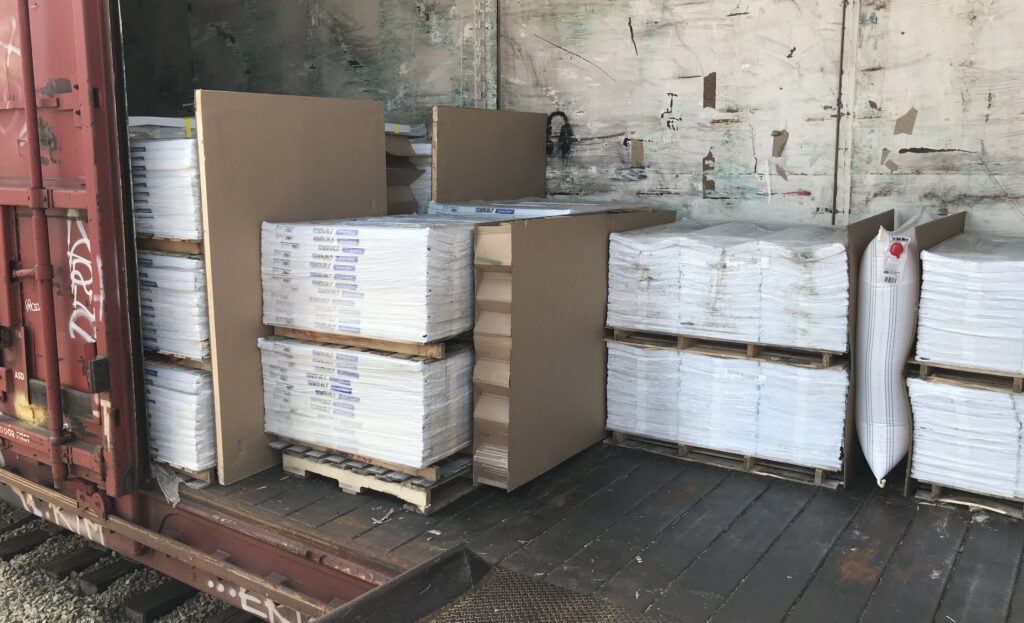
Litco combined corrugated void fill products with airbags to create a railcar securement system tailored to the load. The solution helped a building materials manufacturer reduce recurring damage and meet railroad blocking and bracing standards.
Protecting Freight Means Protecting Every Investment
Long before products leave your facility, considerable work has already taken place. Materials have been sourced. Products have been manufactured. Quality inspections have been completed. Warehouse teams have prepared every shipment. Transportation has been scheduled.
Every shipment represents the combined effort of dozens – sometimes hundreds – of people working toward the same goal: delivering products safely to their destination.
That’s why preventing transit damage isn’t simply about avoiding replacement costs. It’s about protecting everything that came before the truck ever left the dock.
When cargo movement is reduced through the right load securement strategy, organizations often experience benefits that extend beyond reduced freight claims. Companies can strengthen customer relationships, reduce unnecessary waste, improve operational consistency, and protect the investment behind every shipment.
Ultimately, effective load securement isn’t just about protecting freight. It’s about protecting people, partnerships, and the work that goes into every shipment.
Partner with Litco to Reduce Transit Damage
Every shipping environment is different. The right load securement strategy depends on what you ship, how it’s loaded, the equipment used, and where it travels. That’s why solving recurring transit damage rarely begins with purchasing another product. It begins with understanding the customer’s application.
Litco’s field specialists visit customer facilities to observe loading practices, measure voids, evaluate shipping conditions, and determine the combination of securement solutions best suited for each application. Those onsite evaluations and hands-on training sessions are provided at no additional consulting cost because Litco believes successful load securement is built on understanding, not assumptions.
Whatever the recommendation, the objective remains the same: helping customers build a securement system that performs reliably under real-world shipping conditions.
If recurring transit damage continues to impact your operation, don’t begin with a catalog. Begin with a conversation.
Contact Litco to schedule an onsite load securement evaluation and discover how the right combination of education, field experience, and securement solutions can help protect your shipments.
Stop the Shift. Protect the Load.
Freight doesn’t get damaged simply because it travels a long distance. It gets damaged when it isn’t properly stabilized, blocked, and braced to prevent shifting.
Litco’s specialists pinpoint the cause, then work with you to design and test a better way to secure your cargo. That may include airbags, corrugated void fill, bulkhead panels, cargo separators, corner protectors, or a combination tailored to your specific load.
Whatever the challenge, the goal is the same: stop the shift before it starts and protect your products.
There’s a better way to protect your cargo. Build it with Litco.
Transit Damage & Load Securement FAQs
What causes transit damage?
Transit damage most commonly occurs when cargo moves during transportation. Empty space, inadequate blocking and bracing, improper load securement and repeated vibration can all allow products to shift and become damaged.
The result is often transit damaged freight, leading to replacement costs, freight claims and operational disruption. Understanding why cargo is moving is the first step toward determining the right load securement strategy.
Do airbags always prevent transit damage?
Airbags are highly effective when they’re matched to the correct application and installed properly.
However, oversized voids, incorrect airbag selection, improper installation, temperature changes, elevation changes, and other shipping variables can influence performance. In many applications, the most effective load securement strategy may combine airbags with complementary blocking and bracing solutions rather than relying on a single product.
Should I replace my airbags?
It depends.
If airbags are properly matched to the application and installed correctly, they may already be the right solution. In other situations, adjustments to the securement strategy, or complementary products such as blocking and bracing systems, may provide better overall load stability. An onsite evaluation can help determine the most appropriate approach for your shipping environment.
Why does Litco provide complimentary onsite evaluations?
Every shipping environment is different.
Rather than recommending products without understanding the customer’s application, Litco’s field specialists observe loading practices, evaluate shipment characteristics, and recommend solutions based on real operating conditions. Those onsite evaluations and training visits are provided at no additional consulting cost because proper application is essential to long-term success.
Which corrugated load securement product is right for my shipment?
It depends.
During an onsite evaluation, Litco considers factors such as void dimensions, product weight, trailer configuration, shipping route, and loading practices before determining which securement solutions best fit the application. Depending on your shipment, recommendations may include Center Drop Void Fillers, Dual Drop Void Fillers, Bulkhead Panels, LITLoad® Cargo Separators, or a combination of products working together.